- You are here:
-
Home

- News
News

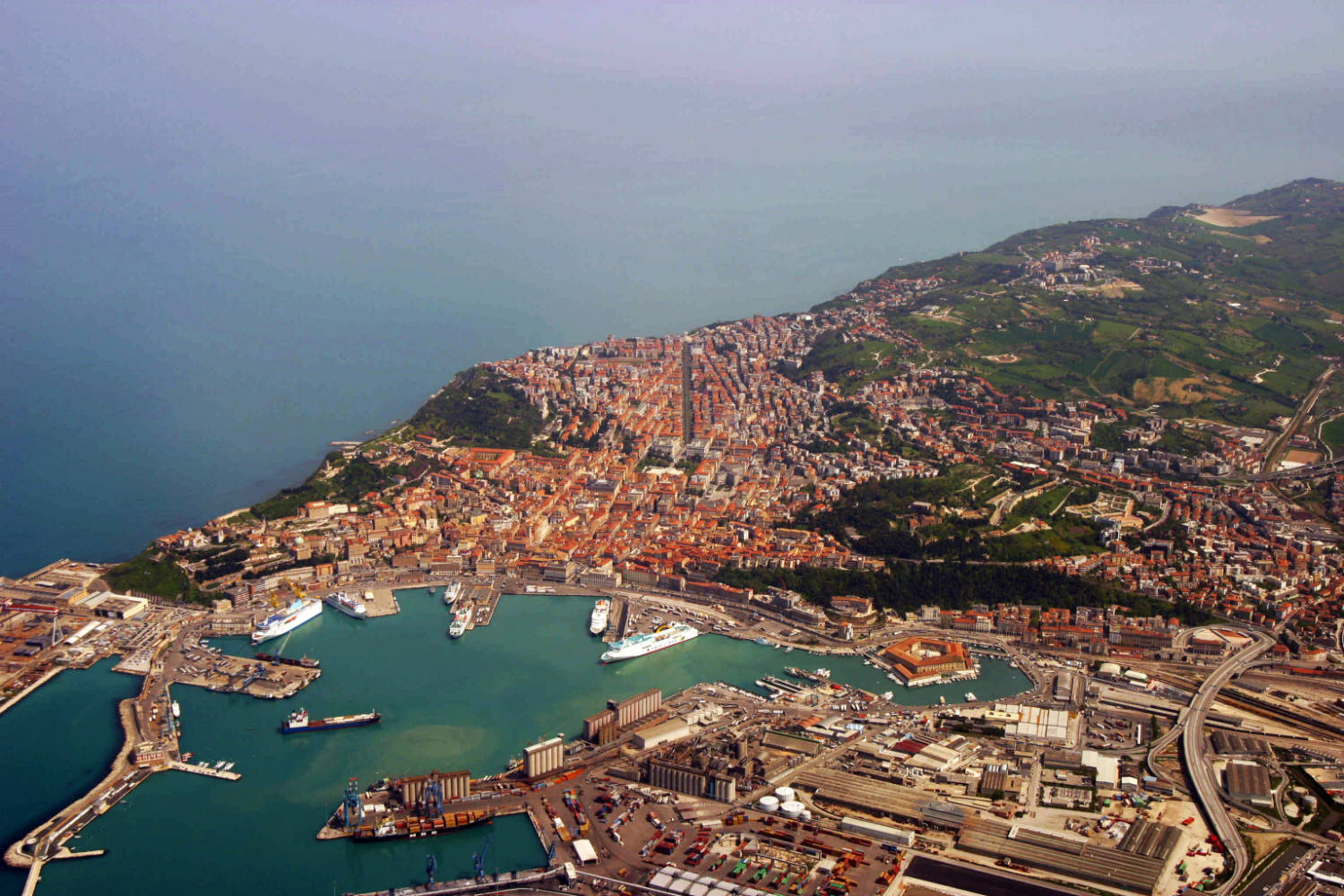
The first Governing Board (GB) of the EU Strategy for the Adriatic and Ionian Region (EUSAIR) was held in Ancona on 22 and 23 January.
The two days' event marked the beginning of the implementation phase of the EUSAIR.
The representatives of the eight participating States , together with the representatives of the EU Commission and of other Institutions represented in the GB , focused on the governance of the Strategy , with particular emphasis on the Rules of procedures of the Governing Board and of the Thematic Steering Groups . They also tackled the issue of an increased involvement of civil society and stakeholders during the implementation phase of the Strategy.
Other items as : general criteria for the inclusion of projects and actions in the Action plan ; communication and publicity of the EUSAIR ; calendar of the Steering Groups meetings ; GB Annual Forum ,were high on the Agenda.
The intergovernmental body of the Adriatic and Ionian Initiative ( Committee of Senior Officials ) met in the margins of the Governing Board in the afternoon of Thursday 22 January.
The main item of the Agenda ( overhaul of the AII Round Tables with a view to align them with the EUSAIR activities ) was thoroughly discussed by the representatives of the Eight Ministries of Foreign Affairs at the presence of a representative of the European Commission.

The project on "Innovative skills and competences for entrepreneurs in order to promote a new sustainable tourism in the Adriatic and Ionian Area" co-financed under the Regional Cooperation Programme 2012 of the Adriatic Ionian Initiative has been successfully concluded.
The project was led by the Adriatic and Ionian Forum of Chambers of Commerce and realized in partnership with associations and Chambers from Albania, BiH, Croatia, Greece, Montenegro and Serbia. Its aim has been to give a concrete contribution to the creation of an integrated tourism system in the Adriatic and Ionian Area favoring the dialogue between private tourist operators and public authorities for the growth of the competitiveness on tourism of the whole Region.
The objective has been realized carrying out a series of activities as follows:
- Establishment of a web-community focused on the development of a more competitive and sustainable tourism;
- Technical seminars for private tour operators in all IAI countries;
- Design and testing of a new technological tool to promote an approach to micro-marketing of a new integrated tourist destination(ADRION);
- A multilingual wholesaler web site focused on accessible and sustainable tourism http://www.adrion-tourism.eu/
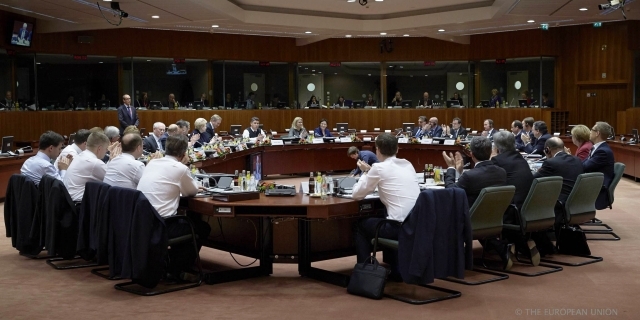
In the European Council Conclusions of Friday 24 October the Head of State and Government of the 28 Member States of the European Union adopted the "EU Strategy for the Adriatic Ionian Region" (EUSAIR) asking to "all relevant actors to implement it without delay, as outlined in the Council conclusions of 29 September 2014".
After more than four years of work and commitment by AII Governments and regional stakeholders, the Adriatic Ionian Macro Region is a reality and the implementation phase is going to begin by the end of this year.
As stressed by the Council Conclusions of 29 September, the new Strategy benefits from:
- The long experience of the intergovernmental Adriatic Ionian Initiative which fostered cooperation at the level of civil society (Chambers of Commerce, Cities, Universities);
- The Maritime Strategy for the Adriatic and Ionian Seas adopted in November 2012;
- The coincidence with the programming period 2014-2020;
- The lessons learned from the already existing macroregional strategies.
The EUSAIR will address major challenges of the region through its four pillar's architecture focusing on Blue Growth, Connecting the Region, Environmental Quality and Sustainable Tourism.
The European Council invited the Commission to regularly report about the progress made "towards the achievement of target and relevant milestones, and possible development of the Strategy and its Action Plan, by the end of 2016 in the first instance".
The European Council Conclusions of October 24 and the Council Conclusions of September 29 are enclosed.
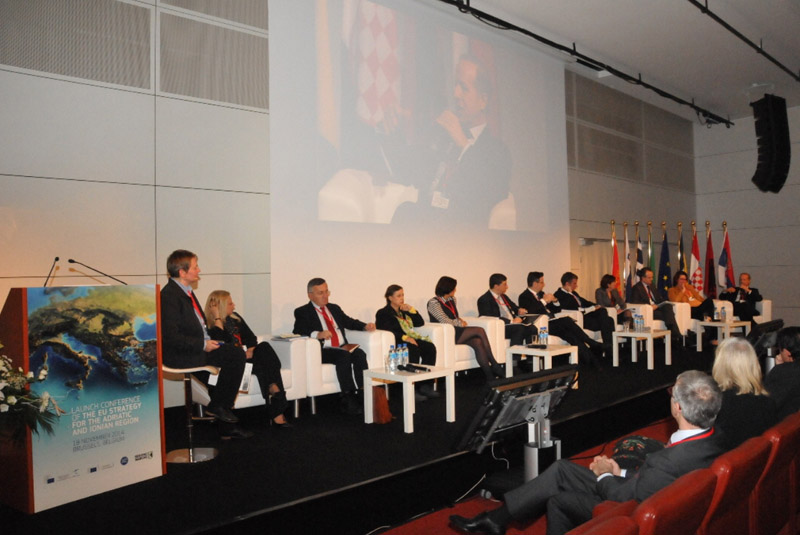
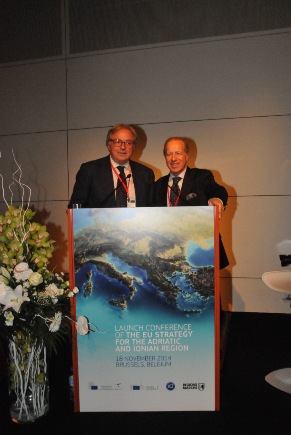
The EU Strategy for the Adriatic and Ionian Region (EUSAIR) was officially launched last 18 November in Brussels during the event organized by the EU Commission and the Italian Presidency of the Council of the European Union in cooperation with Region Marche and the AII Permanent Secretariat.
The Conference was open by the address of Commissioner Corina Cretu (Regional Policy) and Commissioner Karmenu Vella (Fisheries and Maritime Affairs) as well as of the Italian Minister of Foreign Affairs Paolo Gentiloni all praising the commitment the efforts made by the eight participating countries that led to this important achievement and motivated them to work even more closely in the coming and most challenging implementation phase.
Subsequently, all Ministers of Foreign Affairs took the floor and approved a Joint Statement on a Governance and Management System for the implementation of the Strategy agreeing on the system devised in the paper "Towards a streamline governance and management architecture for the EUSAIR" approved by the National Coordinators.
The following session of the meeting was dedicated to question and answers with the presence of National Coordinator and the AII Secretary General on how to move 'from words to actions' with particular focus on the governance and on how to fund future EUSAIR projects.
The General Assembly of UniAdrion took place last Thursday 23 October in Ancona.
More than 20 Universities coming from the eight countries of the Adriatic and Ionian Initiative attended the event that was also the occasion to kick off the SunBeam project funded by the European Commission under the Erasmus Mundus Programme 2013. The programme is aimed at fostering mobility among students, professors and academic staff of the participating universities and to give scientific support to the future “EU Strategy for the Adriatic and Ionian Region” through the exchange of expertise and the research on areas of common interest already identified by the four pillars of the Strategy.